Every year, PC Construction sets aside a week to celebrate the technologies, methods, and people driving the company forward. This year’s Innovation Project of the Year goes to the team behind the Frank L. Ward Water Treatment Plant Filters Rehabilitation project, a major overhaul of four aging filters carried out for the City of High Point, North Carolina, completed while the plant remained fully operational. What set this project apart wasn’t a single piece of equipment or technology. It was the team’s mindset: treating every decision, in the field and in the office, as a chance to do the work better, safer, and more efficiently.
The Davit Crane: A Safer Way Into a Tight Space
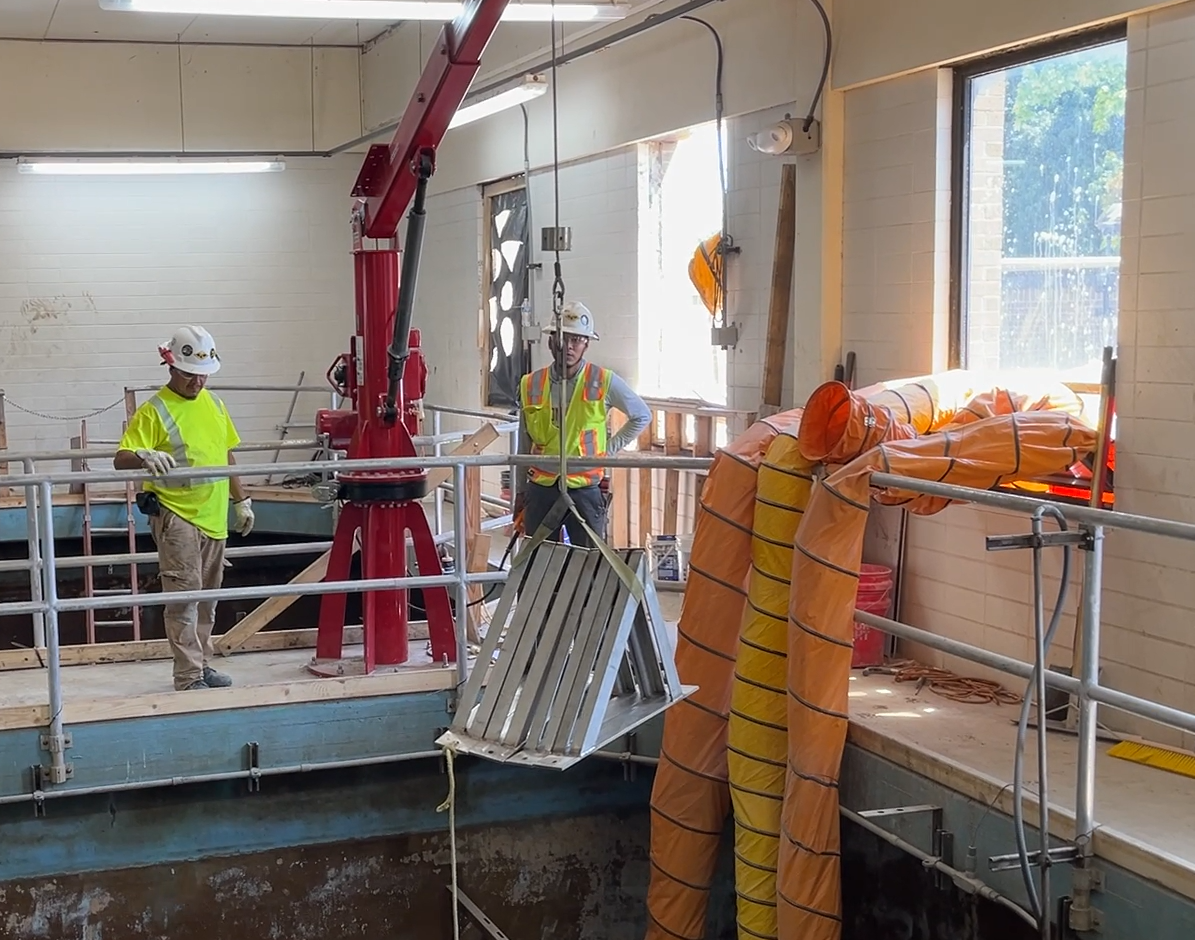
Each of the four filters measured 28 feet by 28 feet, with backwash troughs running through the space and only ladder access down into a confined area. A suspended apparatus wasn’t an option, since the ceiling was hollow-core precast concrete plank which couldn’t support a hanging load. After considering options like custom conveyors and other rigging methods, the project team chose a different approach: a davit crane rated for over 2,000 pounds at a 10-foot radius, positioned so the operator could see exactly what was being lifted and where it was going. Installation required additional engineering to tie the crane’s new supports into the platform’s existing structure, including work around embedded rebar. The same crane is already staged for its next job providing rigging to support a diver replacing a 36-inch butterfly valve.
Keeping It Together, Not Taking It Apart
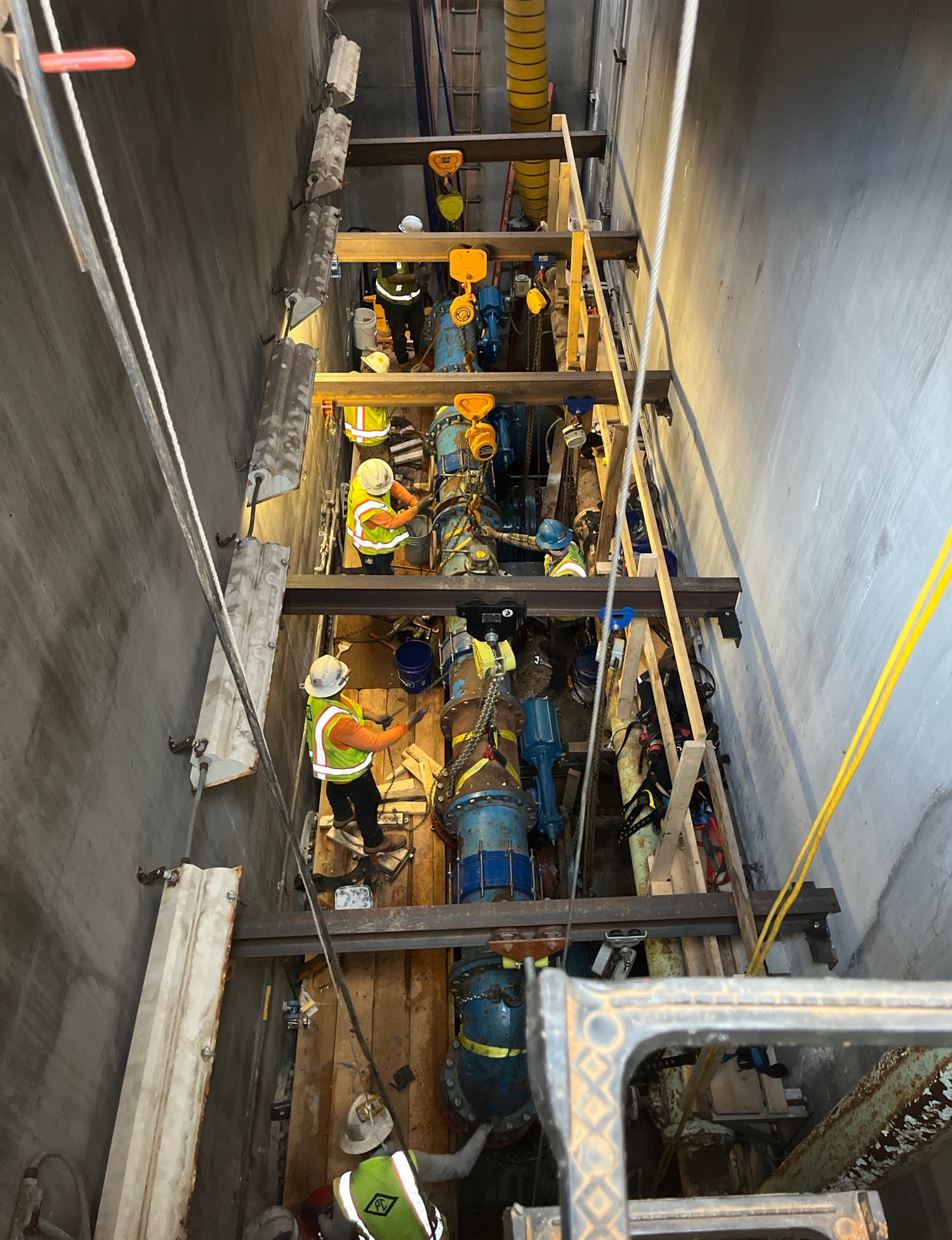
Replacing four 16-inch butterfly valves under a flanged header normally means full disassembly – with new gaskets, new bolt kits, and real risk of damaging materials that have held a 30-year-old system in place. Lead Foreman Andrew “Chilango” Pacheco suggested a different plan: keep the entire 60-foot-long assembly intact. His idea was to install temporary steel supports and beams overhead to lift the entire header assembly, move clear of the work area, then realign and lower it back into place after the valve replacements. PC ran the initial calculations, had the approach professionally engineered and stamped, and fabricated the structural steel system to make it happen.
The payoff: one full week saved on the critical path during the filtration shutdown, and hundreds of aging bolts and dozens of pinch points removed from the process entirely – the result of managing risk proactively instead of reactively on a piping system nobody wanted to touch twice.
Cost Control at the Pace of the Work
PC is piloting a new way to manage the financial side of self-perform work. On a project with more than 25,000 labor hours, the real test is whether the numbers keep pace with the crew. The team fed field production data directly into cost forecasting, so job costs update daily as the work happens, not weeks later once timesheets are processed. Project Manager Paul Lacey now works from a live comparison: what the data projects the remaining work will cost, based on actual production, against his own budget and gauge of the job and this read on percent complete versus percent spent. Two numbers, one decision made with better information than a spreadsheet or monthly estimate-to-complete update ever gave him. Along the way, the team also worked through a few practical wrinkles: vendor invoices that didn’t follow standard formatting and North Carolina’s specific sales tax rules – the kind of details that seem minor but usually require custom workarounds.
Impact on Every Level
This wasn’t the product of a corporate program or a slogan. It came from a project team that found a safer way to move heavy materials in a confined space, protected an aging system that couldn’t be replaced without real risk, and gained a clearer read on cost every day of the job. The benefits reached everyone: sharper cost visibility for the project manager, a safer and more efficient way to execute the work for the superintendent and foreman, and less risk and rework for the craft crew. That’s what PC’s Innovation Project of the Year recognizes, and it’s the standard we’re proud of our North Carolina team for championing.
Congratulations to the entire project team!
Paul Lacey, project manager
Joe Berrigan, superintendent
Andrew “Chilango” Pacheco, lead foreman
Raul Valdez, general superintendent
Philip Bell, LDP project engineer
Sam Nugent, project safety manager